
A documentary film production company with a focus on the human rights of children
http://galenfilms.com/
Clara – Life on the Streets of Mexico City
We shot this interview with fifteen-year-old Clara on the streets of Mexico City. It took a lot of time and effort to track her down and get her to trust us enough to talk to us.
What is Poverty?- One girl’s answer
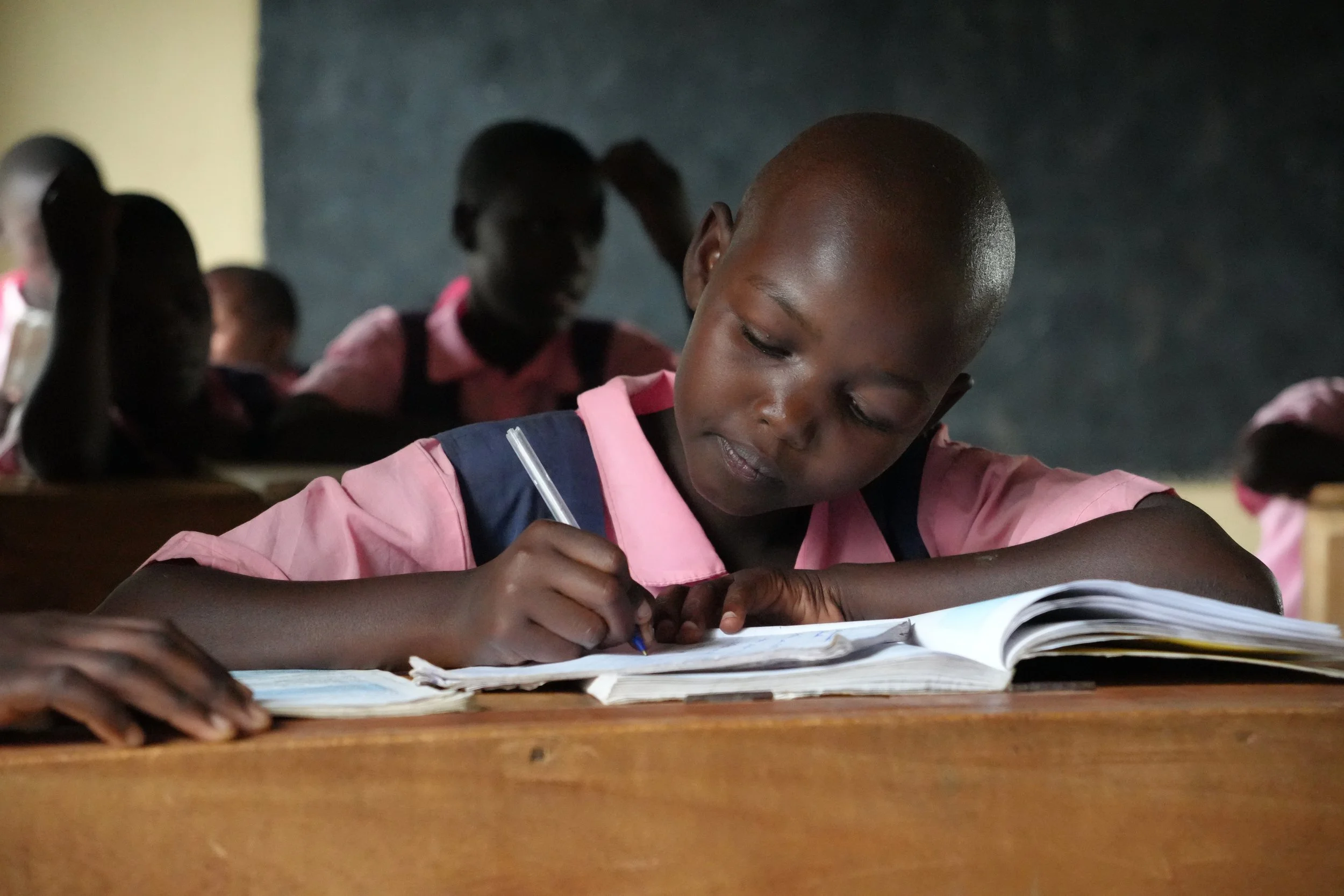
This is an original poem recited by Jemima Onganjo, a Kenyan student working to complete her secondary school studies at a rural school in Kenya where there is no running water, electricity, clean water source or sanitation facilities. This poem, straight from the heart and mind of this young woman, does more than any report to explain, “WHAT IS POVERTY?”
Global March for Education (Excerpt from Stolen Childhoods)
Excerpt from the child labor documentary STOLEN CHILDHOODS, featuring the Shiksha Yatra (Global March for Education) in India.
Girls Prison in Campo Grande, Brazil
Thirteen-year-old Elenaide (not her real name) is serving a prison sentence for smuggling drugs in Campo Grande, Brazil.
Interviewer: Patricia Nascimento
Joseph’s Story (The Same Heart)
49 year-old Joseph Onyango Siri is a widower raising seven children on less than a dollar a day. In this excerpt from the documentary film, The Same Heart, he describes his life to director Len Morris.
Cristina’s Story
Several years ago, during the editing of a documentary on child labor, I screened an interview with a 19-year-old girl, Cristina. She had been working as a nanny in various wealthy families in Salvador since the age of fourteen. The interview was in Portuguese, and I was lining up the English translation track to [...]
Cristina’s Story
Nineteen-year-old Cristina talks about working as a nanny for various wealthy families in Salvador, Bahia in Brazil since the age of fourteen.
The interviewer is Patricia Nascimento.
Interview with Peter Singer
Len Morris interviewed philosopher and ethicist Peter Singer in July 2007. Singer discusses poverty and the moral obligations of wealthy countries.
This interview was recorded in 2007. For an updated account of Peter Singer’s views on world poverty, we recommend his recent book, The Life You Can Save: Acting Now to End World Poverty. You may also visit the related website, www.thelifeyoucansave.com
Peter Singer on The Drowning Child
Philosopher Peter Singer tells the story of the drowning child and poses an ethical dilemma as food for thought.
Rescuing Emmanuel (prison)
Excerpt from Rescuing Emmanuel: undocumented children imprisoned with adults in Nairobi jails for offenses like vagrancy, begging and general annoyance. This footage was shot with a hidden camera.
Rescuing Emmanuel (invisible)
When the filmmakers filmed a group of street children in Nairobi, Kenya, one boy latched on to them and wouldn’t let go. He is Emmanuel. He is thirteen years old, and he wants to go to school. He has no papers, no official existence. He is invisible.
Archbishop Desmond Tutu Interview
Bishop Desmond Tutu was born in 1931 in Klerksdorp, Transvaal. His father was a teacher, and he himself was educated at Johannesburg Bantu High School. After leaving school he trained first as a teacher at Pretoria Bantu Normal College and in 1954 he graduated from the University of South Africa.
From 1967 to 1972 he taught theology in South Africa before returning to England for three years as the assistant director of a theological institute in London. In 1975 he was appointed Dean of St. Mary’s Cathedral in Johannesburg, the first black to hold that position. From 1976 to 1978 he was Bishop of Lesotho, and in 1978 became the first black General Secretary of the South African Council of Churches.
Tutu is an honorary doctor of a number of leading universities in the USA, Britain and Germany.
Leaving the Fields
This is an excerpt from the documentary feature, STOLEN CHILDHOODS, that deals with child labor in the onion fields of Texas. Most Americans are unaware of the fact that our food is often picked by children who are exposed to the hazards of pesticide poisoning, injury and exhausting work without limit. There is presently no federal law protecting children who work in American agriculture. This is a blatant violation of United Nations Resolution 182- which the U.S. has signed. Look at this segment to understand what it means to have your education disrupted, to leave on short notice to work and help your family make ends meet. Yes, we have child labor in America.
Childhood Lost
These are the testimonies of young women who took their chances in the city, rather than remain at home doing domestic labor. Many of these stories are typical of internal trafficking, where a young woman or man is promised a job or a chance to go to school, only to discover that they have to support themselves by selling their bodies in clubs or on the street.
Stone Quarry/Forced Labor
In the stone quarries of Orissa, India, young women work from dawn to dark. These are modern slaves who must pay off debts incurred by their families. Their work is the collateral for the loan. More often than not, they will work away their youth only to be discarded the minute they’re injured or unable to continue. This is an excerpt from STOLEN CHILDHOODS.
What’s A Slave?
Shot at a brick kiln in Orissa, India, young girls and boys make bricks for twelve to fourteen hours a day. They are bonded laborers. Senator Tom Harkin explains the face of slavery today.
Rail Children of Orissa
This is the real slum-dog, children who live by begging for food on the trains of India.
Worthless Girl
A group of young women at a school in Kiambu Province, Kenya perform an original poem they have written that tells of their life experiences with abuse and child labor.
The Kenyan Education Fund
This video describes how a grassroots community organization helps former child laborers in Kenya get an education and introduces a few of the children they support.
Rescuing Emmanuel
Setting out to make a film about street children across the globe, the filmmakers are hijacked by a filthy 13-year-old boy on the streets of Nairobi, Kenya. Belligerently stoned on shoe glue, Emmanuel grabs us. “I want to go to school right now!”. He is hungry. He tells of the death of his mother, his horrific life in Kibera, Nairobi’s most notorious slum, his escape to the streets. Undocumented, a nobody, he stinks, eats garbage, is raped “by the big boys,” is “swept” off the streets by police and sent to adult jail cells. Who will notice if this kid’s life is snuffed out? And ironically, his name, Emmanuel, means “God among us.”
After going to film in the slums and countryside to find the roots of why kids are pouring into the streets to raise themselves, we are haunted by Emmanuel. We find a grown man, “Bravo,” who raised himself on the street and he tells us, “It is hunger!” We take hidden cameras into clubs where little girls are selling their bodies “for a piece of chicken.” We visit a remarkable home where Mama Zipporah and her husband Isaac have taken in 150 abandoned children as their own, living on faith to feed the kids. We search for solutions, but are still haunted by Emmanuel. And when we return to Nairobi, he is nowhere to be found. Street boys tell us “he stole a TV. He is on the run.”
A search, a rescue, a home, a school . . . all follow, with unexpected results. Emmanuel is taken to a hospital to “dry out” from the glue he sniffs to “keep away the hunger.” He is cleaned (no small task.) He is clothed. He is taken to school. He walks into his dream . . . and yet the dream takes a turn . . . heartbreaking and yet, somehow, hopeful.
Why are 100 million children living on the streets of the world? Emmanuel’s story can teach us all.
Stolen Childhoods
STOLEN CHILDHOODS, stories of children across the world for whom life is nothing but work. An examination of global child labor, narrated by Meryl Streep.
STOLEN CHILDHOODS was made over seven years time, filming children laboring like slaves in eight countries across the globe. These kids understand two things: one, that unlike other children, their childhoods don’t count; and two, that hard work is all they will ever know.
“It’s a slow death,” says Wangari Maathai, 2004’s Nobel Peace Prize winner. Senator Tom Harkin sees child laborers as “a breeding ground for future terrorists.”
The message of STOLEN CHILDHOODS is very timely. Helping these children is an opportunity for us to help ourselves. The film asks us all to keep the promises the world community has already made; to provide universal education for all children, and to act against the poverty, profiteering and prejudice that produces this shameful waste of children’s lives.
When you hear these kids speak for themselves, it is impossible not to listen and not to act.
Len Morris, Director
America’s Child
America’s Child is a documentary about the children we are failing to help and those whom we are indeed helping through successful programs. We will meet advocates that work on the front lines and who deal daily with the most vulnerable citizens of our country, poor children.
We will get to know some of these children and hear what they have to say. We will come to understand the obstacles children of poverty inherit and experience their resilience in overcoming them by sharing in their lives.
Every day in the United States, over six hundred thousand children are homeless. The phenomenon is increasing as the gap between wealthy and poor Americans widens. At homeless shelters all over America, families and single parents with children are turned away daily to fend for themselves on the streets. Many of these adult homeless are fully employed at low-paying jobs with wages insufficient to provide basic necessities for their children in increasingly gentrified cities like Washington. When a family has spiraled to the bottom of our society and can’t provide a simple, consistent address to call home, government agencies are unresponsive and help is difficult, if not impossible to obtain.
The choice of filming in Washington, D.C. is both symbolic and deliberate. Symbolic because all of the power and means necessary to address the inter-locking problems of homeless children reside there in our nation’s capitol-while homeless children live invisible childhoods in adult shelters less than a block away. Deliberate because the purpose of America’s Child is to raise awareness of our government’s failure to adequately address the needs of poor children, not just in Washington, but nationwide.