
Stones for Lunch

The playground appeared perfectly normal with students clustered here and there laughing and enjoying their lunch break. But if you looked closely, you’d notice another group milling about or sitting alone, the students with empty lunch pails.

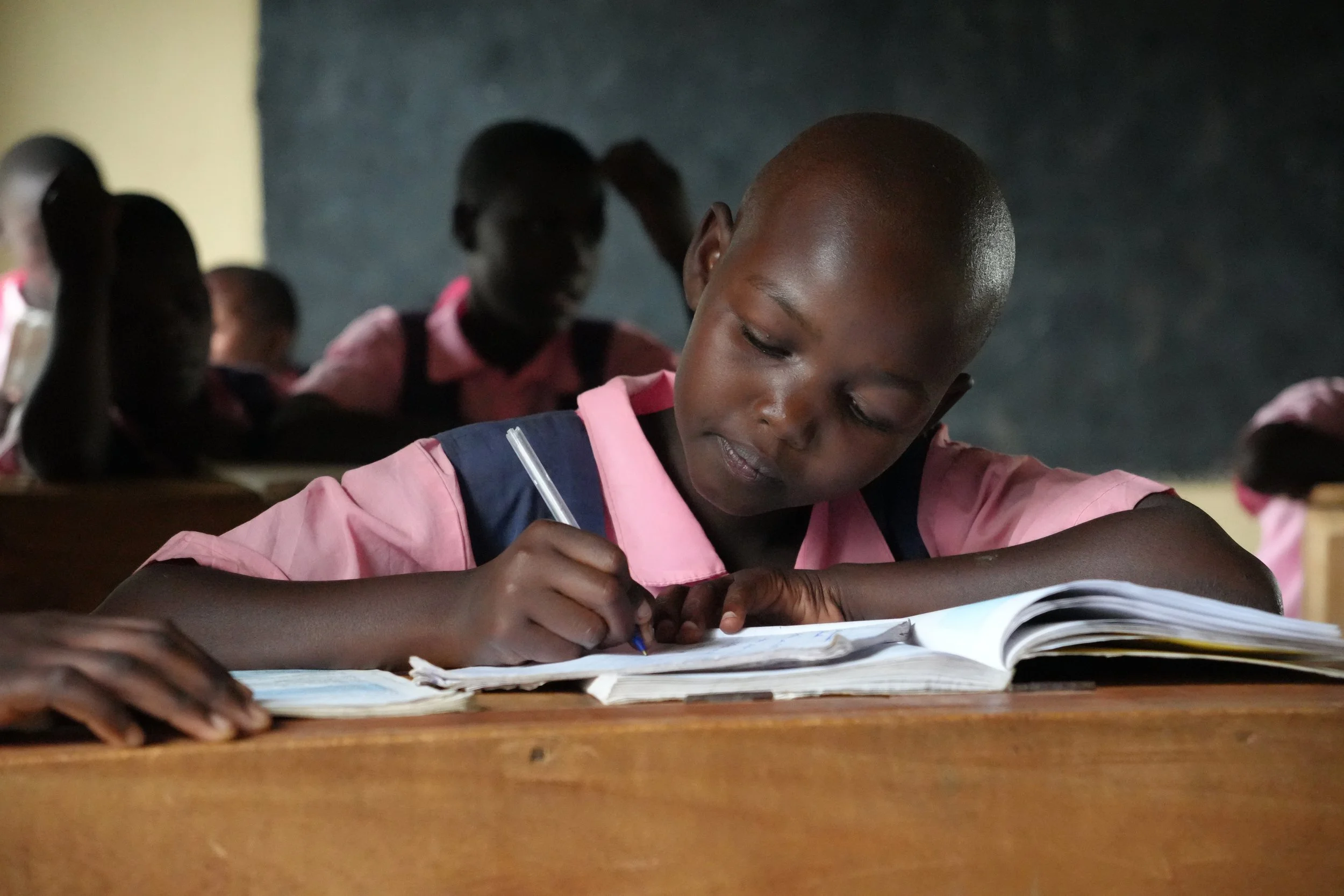
We were visiting a primary school in Kenya that was situated on a large coffee plantation. Many of the children would leave school to pick coffee when the beans were ready to harvest. In this part of the world, jobs are scarce and coffee is the only available work for entire families. Parents simply keep the kids home from school to work in the fields, 13 hours a day for the equivalent of less than a dollar. Once the coffee has been picked, the children will return to classes, where they have inevitably fallen behind in their schoolwork.

Just before lunch, I had interviewed the school principal who told me that more than half the students at her school had nothing to eat during the school day. Those students with lunch would have only what they could manage to bring from home or a piece of sugarcane to chew on. Those without food would put stones in their lunchbox in an effort to fool the teachers and avoid the shame of being the poorest among the poor.

So now, I’m looking at the playground in an entirely different way. Who has food? Who is hungry?

In A Life Free From Hunger: Tackling Child Malnutrition, Save The Children UK reports that half a billion children suffer from chronic malnutrition of the kind invisibly stalking that Kenyan playground. These children are on a slow daily grind to compromised health: weakened immune systems and death from opportunistic illnesses like diarrhea, pneumonia and malaria. One third of all of the children in developing countries are malnourished and 2.6 million of them die as a result.

This is clearly a preventable catastrophe and we know how to prevent it.

In 2010, The World Food Program fed 22.4 million children through school lunch programs in 62 countries. WFP has had a lot of practice; they’ve been doing this for 45 years.

School lunches offer a lot of return on investment. Three of the Millennium Development Goals are directly addressed: reducing hunger by half, achieving universal primary education and achieving gender parity in education by 2015. 49% of the children in 2010, the last year with figures available, were girls whose parents have decided it’s worth sending their daughters to school to be educated and fed.

A WFP lunch can take many forms, breakfast of fortified porridge, or a mid-morning snack of biscuits, each with sufficient nutrients to prevent the chronic malnutrition that’s so deadly to children. For families with orphaned children and to encourage young girls to come to school, a take-home ration of rice or oil is sometimes provided.

Academically, students who aren’t hungry are more attentive and have higher marks, absenteeism is reduced and fewer children need to repeat grades. In remote areas, school attendance can increase four-fold when a lunch program is established.

Health benefits go beyond the obvious impacts on hunger. Having children at the school creates a chance to run deworming and vaccination programs. As a supplementary benefit, the programs connect local farmers, parents, cooks and local markets, thus improving the local economy by putting adults to work.

And when adults have employment, they can afford to send their children to school.

If you want to reduce child labor, poverty, hunger and gender inequality – there’s no more direct way to do it than through education. If you want to enhance education and get those kids out of the worst forms of child labor, add food and health care to the mix at the local school.

So what would this cost, if we were really serious about getting it done?

The WFP tells us that feeding the 66 million primary school-aged children who attend school hungry would cost 3.2 billion dollars a year. Presently, the program receives about a sixth of that amount or less than 500 million dollars a year. The World Bank estimates that it would take about 10 billion dollars a year to reach 90% of the malnourished children world-wide, in school or out, a cost they characterize as reasonable, if divided among wealthier donor countries.

On my most recent trip to Kenya I met with the District Education Administrator for the Kiambu District, the area near Nairobi that is dotted with slums and coffee plantations where children pick coffee to survive. He told me that only a third of Kenyan elementary schools have lunch programs and that it would cost about 35 cents per student to initiate a lunch program at one of my favorite primary schools in his district, Ngegu Primary School.

I’ve been dropping by Ngegu for the past ten years. We have supported students there as part of the Kenyan Schoolhouse Program since 2002. On these visits I’m always greeted by Headmistress Jennifer Gakuru who has been trying to get a lunch program started there for her 709 children. She’s still working at it.

During a tour of the school last September, she proudly showed their fruit trees, maize and beans in cultivation and the wash sinks installed by local contractors, awaiting the day when lunch is served to all.

Now all that’s needed is a generous donor to get this party started and perhaps, in several years time, the Kenyan government or World Food Program will assist with some funding. In the meantime, we need a three-year commitment of around $20K a year to create a model program in an area challenged with hunger, child labor and poverty.

Will it make a difference? Ask the kids.

By the way, if sixty thousand dollars is too steep for your budget, you can make a donation online and Fill the Cup! at the World Food Program’s web site. $50 a year feeds a single child a school lunch- minus the stones.

  • Share/Bookmark

Leave a Reply